
Yesterday I drove from Jerusalem south to Kiryat Gat, a city of 62,000 about 75 minutes southwest of Israel’s capital by car. When I first volunteered in the 1980s at Neve Hanna, the home for children, it was a development town for immigrants with little to do and less to offer. Today it is home to major Intel and Hewlett-Packard plants and high rise apartment buildings dot the landscape.
At Neve Hanna I sat down with Ian – last names never seem to matter so much in Israel – the home’s staff psychologist for nearly 30 years, to discuss the impact of October 7th and its aftermath on kids who already have trust issues and emotional insecurities from troubled families.
On major holidays most of the children go home to their families for a day or two of visitation, which is to say that the majority of the kids on Simhat Torah, the morning of October 7th, were not at Neve Hanna, but with their parents in places like Ofakim and Ashkelon, the former a target of Hamas terrorists, the latter heavily pummeled by rocket fire before, during, and after the morning attack.
Thankfully, none of the current residents were injured, but absolute chaos reigned. Children, whose parents are only marginally responsible in the best of circumstances, found themselves left alone; some wandered the streets because no one was home, calling Neve Hanna on their cellphones begging to return. Meanwhile, the shutdown of roads around the Gaza envelope and the rocket attacks precluded volunteers from leaving Neve Hanna to pick up children. It took nearly two weeks and a few acts of defying government bans of vehicular travel to get all the kids back.
On top of that schools were closed for weeks after October 7th. In the interim, classes via Zoom were organized, a reminder of life during the pandemic. The trauma of those days certainly took their toll.
Yet these children are resilient, and they know how much the incredible staff love and support them. The kids I spent time with were smiling; they even giggled at my silly jokes. I played with them and shot a few hoops (and made two baskets!).
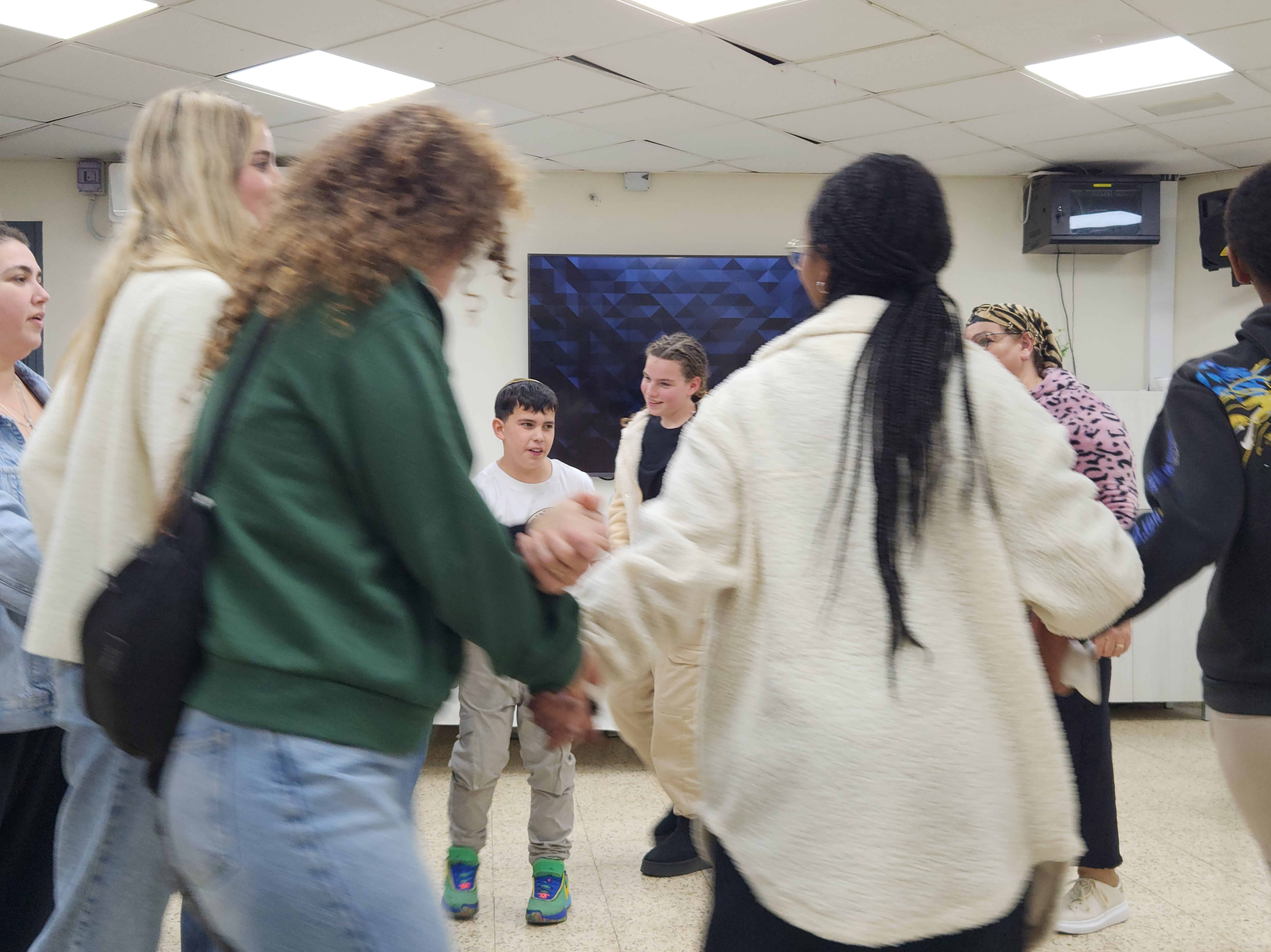
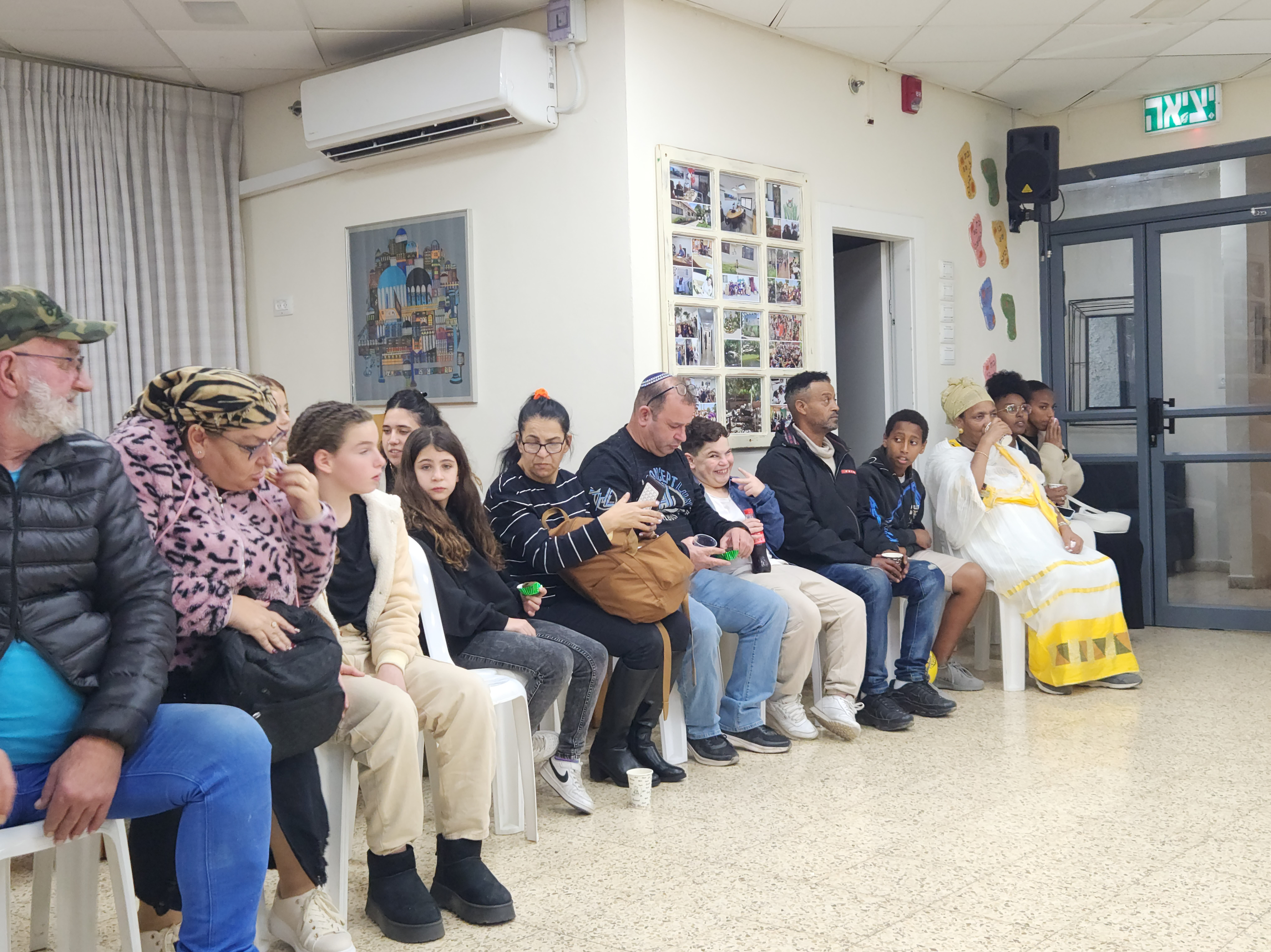
In the afternoon I attended one of the periodic celebrations Neve Hanna holds for b’nei mitzvah and their families. The yearlong program includes focused learning, trips, and projects supervised by the campus rabbi, Rabbi Liron, who is a graduate of Machon Schechter, the rabbinical school for Conservative clergy located in Jerusalem.
Each child led a creative presentation to tell the audience of staff, visitors, and family members, something about themselves. One sculpted figures from clay to tell his story, several created videos, still another created a Kahoots game online. Liron prefaced the afternoon with an explanation of the b’nei mitzvah program by comparing its components to a recipe for sufganiyot, the fried donuts that are ubiquitous in Israel around Hanukkah. She took things, however, one step further by actually mixing together the ingredients for the audience: flour (Torah) + yeast (ethics) + water (a thirst for learning) + oil (the projects in which the aforementioned are “cooked”, so to speak) + sugar (the celebration at year’s end, which will take place in June at Robinson’s Arch, the egalitarian Kotel in Jerusalem. It was a masterful way to keep the students and their parents attentive!
Following a celebratory dinner with the b’nei mitzvah families I returned to Jerusalem.
Because it’s getting late and I have to get up very early tomorrow, I’ll share today’s experiences with you tomorrow. I’m including a few photos from Neve Hanna.
Laila Tov!
Jonathan Lubliner
Jack F. Shorstein Senior Rabbi



 Rabbi Jonathan Lubliner