Category Archives: RJL Biography

THOUGHTS FROM ISRAEL #8

I’m sitting on the terrace of the Dan Boutique Hotel, enjoying a cup of hot coffee and savoring the air of a crisp winter evening in Jerusalem, when I notice a half dozen washers and dryers in an alcove at the back of the patio. It seems an odd place to put laundry machines: most hotels do their sheets and towels out of sight of the guests. The washers and dryers are also far smaller than the commercial machines used by such establishments. My next thought is they must be for guests, but they lack coin slots. Does this hotel really offer free laundry to lodgers?

When I ask at the front desk, I learn they’re not for guests, or more accurately, for guests like me. The Dan Boutique, like many other hotels in central and southern Israel, has housed northern residents displaced by months of shelling and rocket fire. Paid for by the government, thousands of Israelis have been living in hotels for a year or more. At the Dan Boutique, almost 30% of the guests are displaced families. The free washers and dryers are exclusively for their use.

Ever since childhood I’ve loved staying in hotels. Hotel stays meant vacations, tons of TV channels, cool toiletries, and someone else to make your bed. But imagine if circumstances compelled you to live in a hotel for more than a year without a kitchen or most of your belongings?  The novelty of a hotel stay would lose its charm quickly. If the current ceasefire with Hezbollah holds, perhaps these folks will be able to go home. From my conversations with them, their impatience to get back to their lives is obvious.

The next morning, I drive to Tel Aviv to visit Hostage Square. Located in front of the Tel Aviv Museum of Art, the square is about the size of a square block. Although the plaza has accommodated as many as 120,000 people at once, there are only two dozen or so individuals wandering among the various sculptures and art installations expressing the pain and fear of the captives and their families.

In the back of the square is a 25-meter-long faux tunnel, a reminder of the subterranean hellholes in which the terrorists have imprisoned the hostages. Inside the names of the kidnapped are written on the walls; gunshot sounds are periodically broadcast through a speaker to underscore the peril the captives face.

At the center of the plaza sits a yellow piano, donated by the family of Alon Ohel, a 24-year-old musician imprisoned in Gaza. Passersby are invited to play it – Alon’s mother believes that in some profoundly spiritual way Alon and his fellow hostages can feel the music reassuring them they aren’t alone.  Indeed, perched atop the instrument is a sign which reads, “You Are Not Alone”. Earlier this year, musicians played identical pianos in cities around the world — including Berlin, Paris, New York, and Pittsburgh — to honor the captives.

When I first arrive, a young man is soulfully playing the piano. When he leaves, I sit down on the bench. I’d like to play, but the only song I know on a keyboard is “Mary Had a Little Lamb,” and it feels sacrilegious to play something so silly. Instead, I sit quietly in silence and send the music of hopeful thoughts toward Gaza.

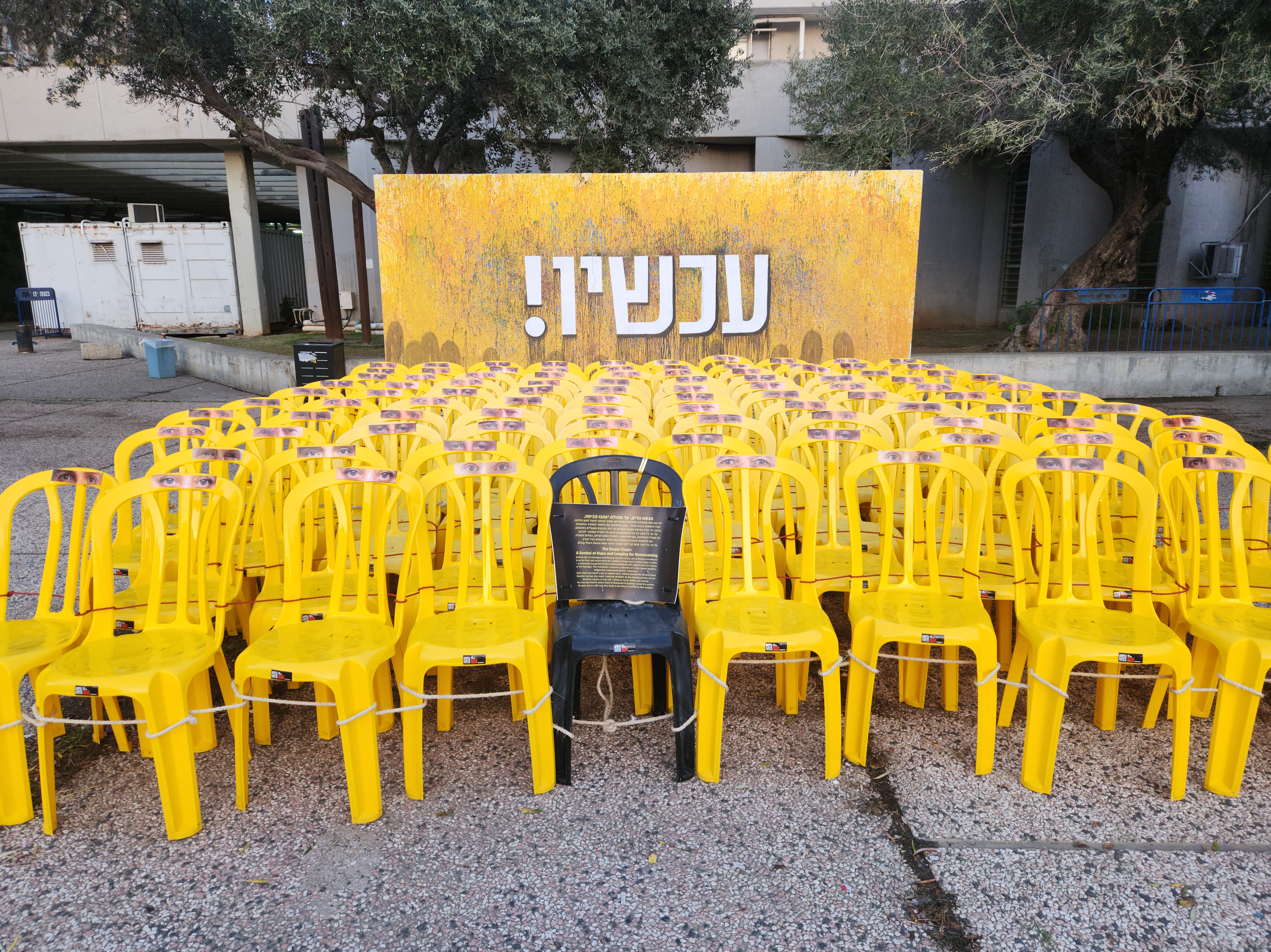
Along the side of the plaza is an installation of yellow chairs chained together. On each is a rectangular sticker with a pair of eyes staring back at the viewer — accusingly? with anguish? It’s impossible to know. 

The empty chairs remind me of Kiseh Eliyahu, the Chair of Elijah, on which it is customary to place a baby boy before his bris. In First Kings, Elijah experiences an overwhelming sense of loneliness and isolation. Believing he is God’s sole surviving prophet, he complains to the Almighty that Israel has abandoned God’s covenant (I Kings 19:10).  According to rabbinic tradition, the Eternal decrees that Elijah must forever after attend every brit milah to bear witness to Israel’s fulfillment of its covenant with God. Elijah is also the herald of the Messianic age in Jewish thought – was the invisible prophet sitting on one of those yellow chairs? Or were the empty chairs a lament of abandonment as poignant as Elijah’s? Were we able to bring the hostages home would the Messiah then come? The answers remain as hidden as Elijah’s whereabouts.

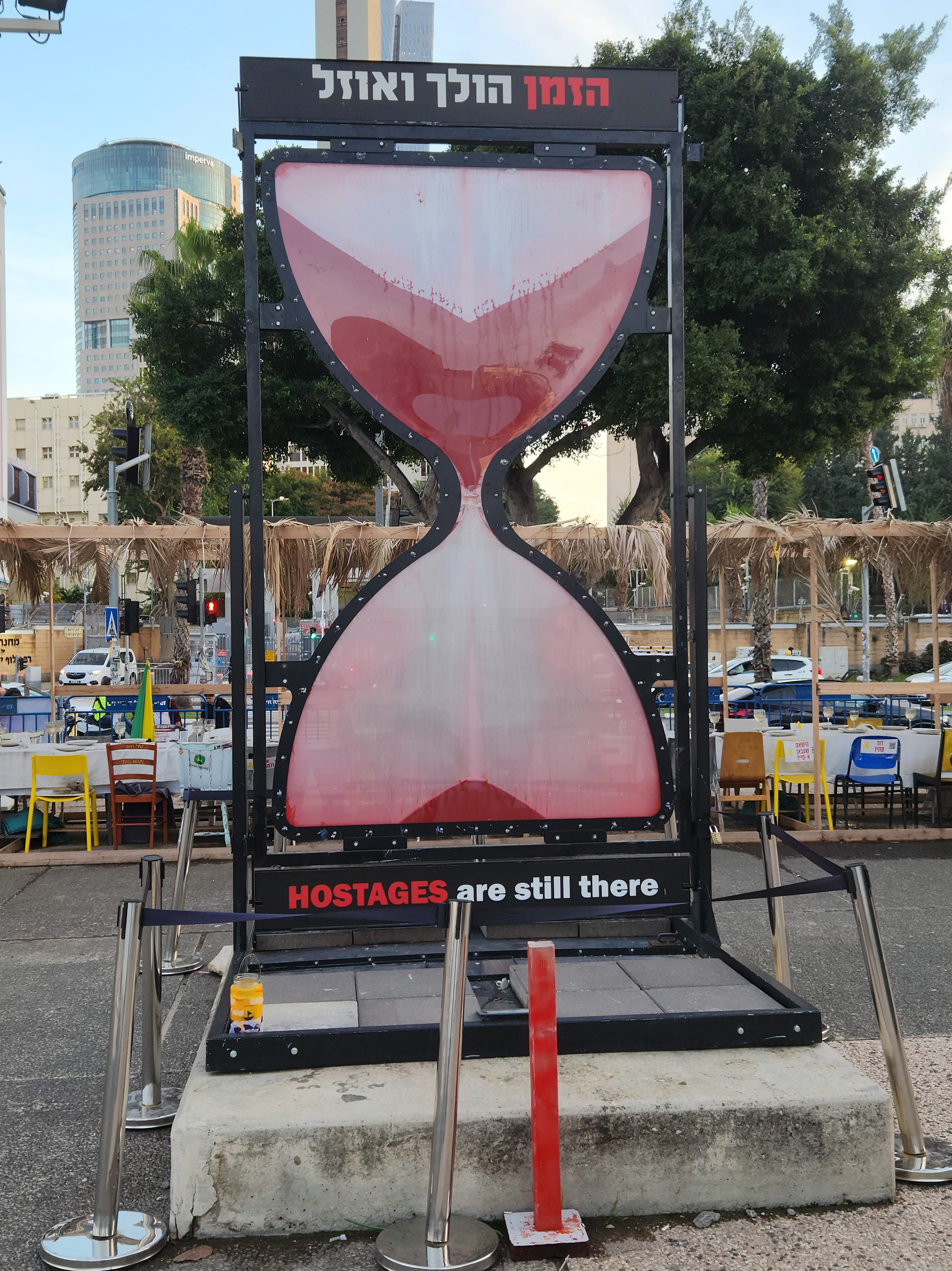
Near the empty chairs is a huge electronic clock tracking the days,  hours, minutes, and seconds since the hostages were taken to Gaza; it relentlessly measures the duration of captivity in ever increasing increments. What we really need, however is a countdown clock. There is no way to know, of course, how much time the hostages have left before they are murdered by Hamas terrorists, or die of neglect, illness, or even from the friendly fire of Israeli forces. But surely time is running out. A large picture of an hourglass positioned elsewhere in the square reminds one of this terrible, yet incontrovertible, truth.

In Israel I see relatively few people wearing yellow ribbons. This is not surprising. If you think about it, the entire country is a big yellow ribbon. The photos of the hostages are everywhere. Banners are hung from highway overpasses and on streetlights.  They read: “What if it were YOUR child?”; “Forgive us for not bringing you home”; or “Save them from hell”. Other signs express dismay with the government, calling for a non-partisan commission to formally investigate responsibility for the colossal security failures of October 7th or castigating the ultra-Orthodox who refuse to serve in the IDF during this time of war. A huge billboard over the Ayalon Freeway in downtown Tel Aviv features a photo of a scowling Donald Trump with an English message: “End this F***ing War Now!” Underneath the President-Elect’s picture appears the caption “Make Israel Normal Again”. The plaintive message communicates anger and angst. 

As darkness falls, I leave Hostage Square and head back to Jerusalem. As my car climbs through the Judean Hills on Highway 1, I see the city lights shimmer in the distance, beckoning and welcoming me back to Jerusalem. What the hostages would give to see those lights growing brighter around every upward curve of the highway! They are just 76 kilometers . . . and a galaxy away. Tonight will be my last night in Israel. I pray it will not be theirs.

Jonathan Lubliner
Jack F. Shorstein Senior Rabbi

Leave a comment

Filed under RJL Biography

THOUGHTS FROM ISRAEL #7

I write these words Saturday evening after a much needed day of rest.

Yesterday morning I connected with a fellow named Avi, who has turned his apartment in the Katamon neighborhood of Jerusalem into a bakery of gourmet hallot for soldiers, which volunteers then deliver on Friday for Shabbat. After loading six crates of hallah into the back seat and trunk of my rental car, I made the 90-minute drive to Be’eri and then Zikim. 

As is often the case in Israel, things which appear simple and straightforward on the surface become more complicated up close. My contacts were not waiting at the designated spot, and I felt a bit foolish telling the sentry I was looking for Matan with a load of hallot from Avi (imagine showing up at the front gate of NAS-JAX saying, “I’m looking for Dave with a load of rolls from Steve”!). Eventually, with multiple back-and-forth calls, I successfully delivered 200 hallot to two groups of grateful soldiers.

A few words about these kibbutzim, nearwhich the soldiers are stationed. Zikim is on the coast, a few miles north of the Gaza border. On the morning of October 7th it was attacked by terrorists in an amphibious assault. While they managed to repel the aggressors,  19 civilian beachgoers were killed. Be’eri, the largest kibbutz in the area was hit even harder. Hamas members overran the community, murdering, raping, pillaging, and destroying. Of the 1,000 kibbutzniks 100 were killed or dragged off to Gaza — 10% of its population.

Individuals are not permitted to visit either community, but organized groups can make arrangements for tours. Indeed, while waiting to make my hallah deliveries to Be’eri, I saw four tour buses enter the kibbutz. I experienced the same surreal feeling as I had the day before watching the Israeli Air Force attack Gaza — a sense of being a tourist to tragedy. It is vital we bear witness to the atrocities and destruction of October 7th, and yet, in the growth of the tourist trade surrounding the events of that day there is a fine line between gawking and paying one’s respects.

Friday was also the first day of real precipitation since the start of the winter season, the only time of year when Israel receives the rainfall it relies on. As much as one appreciates the brilliant blue heavens that grace Israeli skies so much of the year, the land has a special beauty all its own when it rains. On my drive back to Jerusalem, between the periods of steady precipitation, I glimpsed patches of pink and blue skies interspersed with darker rain clouds.

I enjoyed a wonderful Shabbat dinner with Rabbi Matt Berkowitz, whom many of you know from his visits to Jacksonville. He and his wife Nadia hosted me as well as Nadia’s mom, Sue, who made aliyah from England some years ago.

As I walked the two kilometers back to my hotel from the Arnona neighborhood where Nadia and Matt live, I sat for a while on a bench at the Haas Promenade overlooking the entire Old City, the Mount of Olives, and a chunk of West Jerusalem. Despite the darkness and the fact that I was alone, I had no concern for my safety. For all that people talk about the “dangers” of being in Israel, Jerusalem is one of the safest cities anywhere. Things that I do there without hesitation I would never dream of doing in any American city, including parts of Jacksonville.

The quiet of the night on the Haas Promenade was interrupted only by the occasional passing car (on Shabbat traffic is far lighter and there is no public transportation). Against the backdrop of the incredible vista before me, I heard the distant peal of a church bell and the call to prayer from a mosque in the valley below. Had I been at the Kotel at that moment, I would have also heard the late night murmurings of Jews at prayer. It is this accidental symphony of interfaith worship that defines the music of Jerusalem’s soul. What a blessing to hear its notes carried on the breeze!

Tomorrow I will visit Hostage Square in Tel Aviv. Good night and Shavua Tov!

Jonathan Lubliner
Jack F. Shorstein Senior Rabbi

Leave a comment

Filed under RJL Biography

THOUGHTS FROM ISRAEL #6

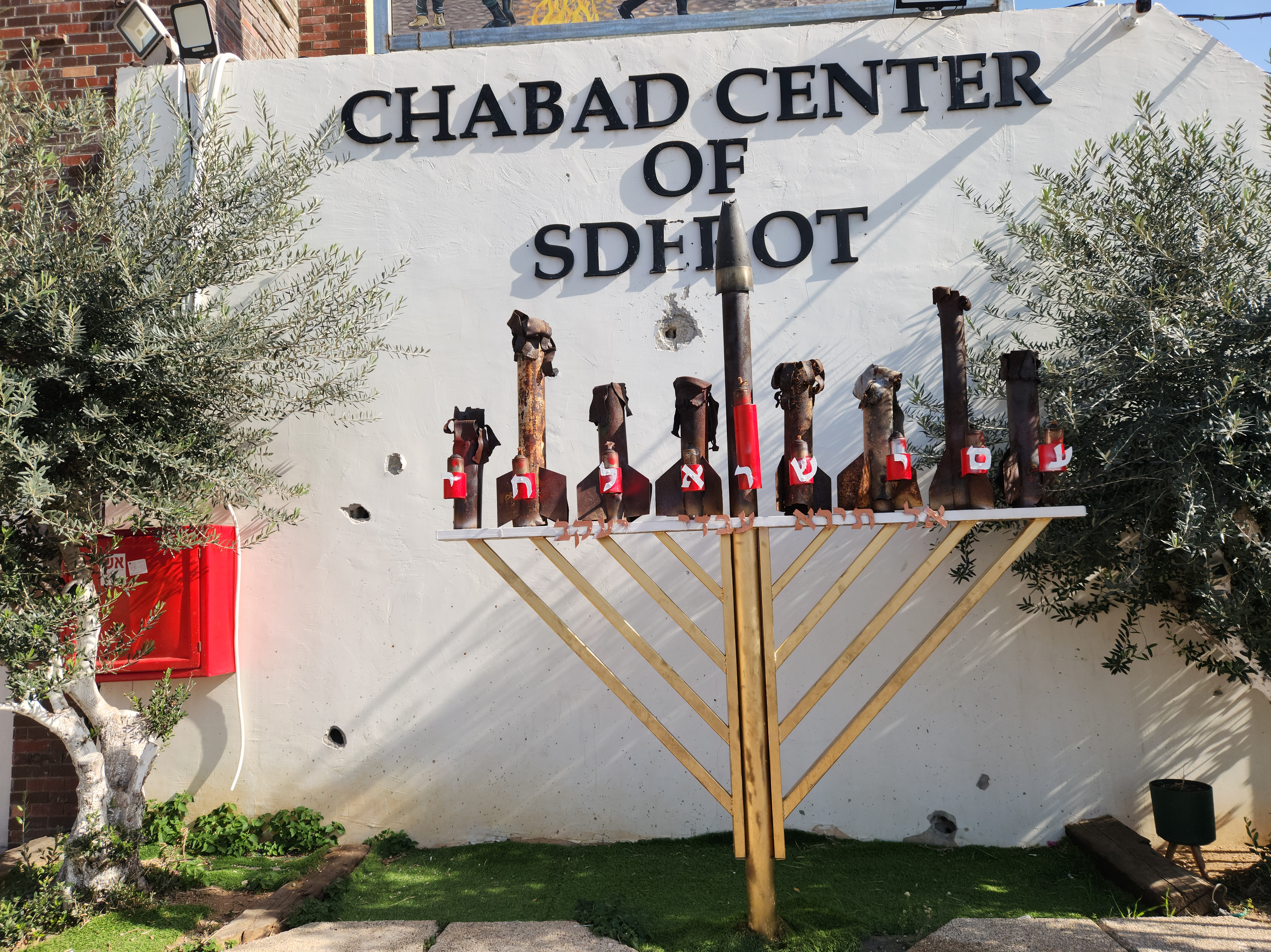
I spent today in the Gaza envelope with a survivor of the Nova Music Festival. I’ve decided not to blog too much about the experience. There are too many thoughts in my head and I need time to process them.  When I return home, I’ll surely want to share more with you on a Shabbat morning as well as the Sunday post-minyan breakfast I’ve scheduled for January 12th.

But I will say this much . . .  It was quite surreal standing on a hilltop in Sderot watching plumes of smoke and hearing explosions in northern Gaza just 10 kilometers (6 miles) away. Busloads of Israelis and tourist were there taking photos, spectators to a life and death struggle taking place right before our eyes.

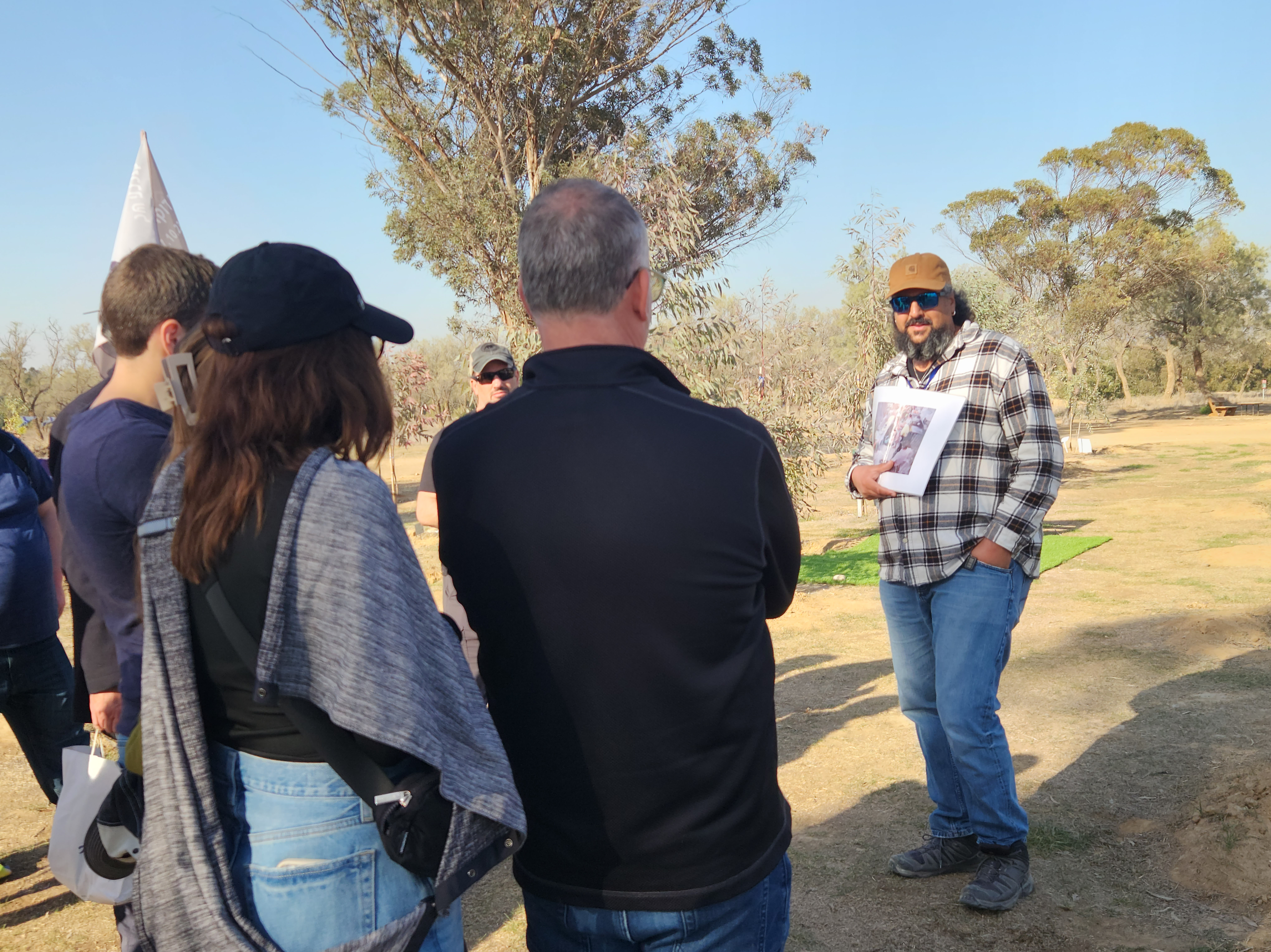
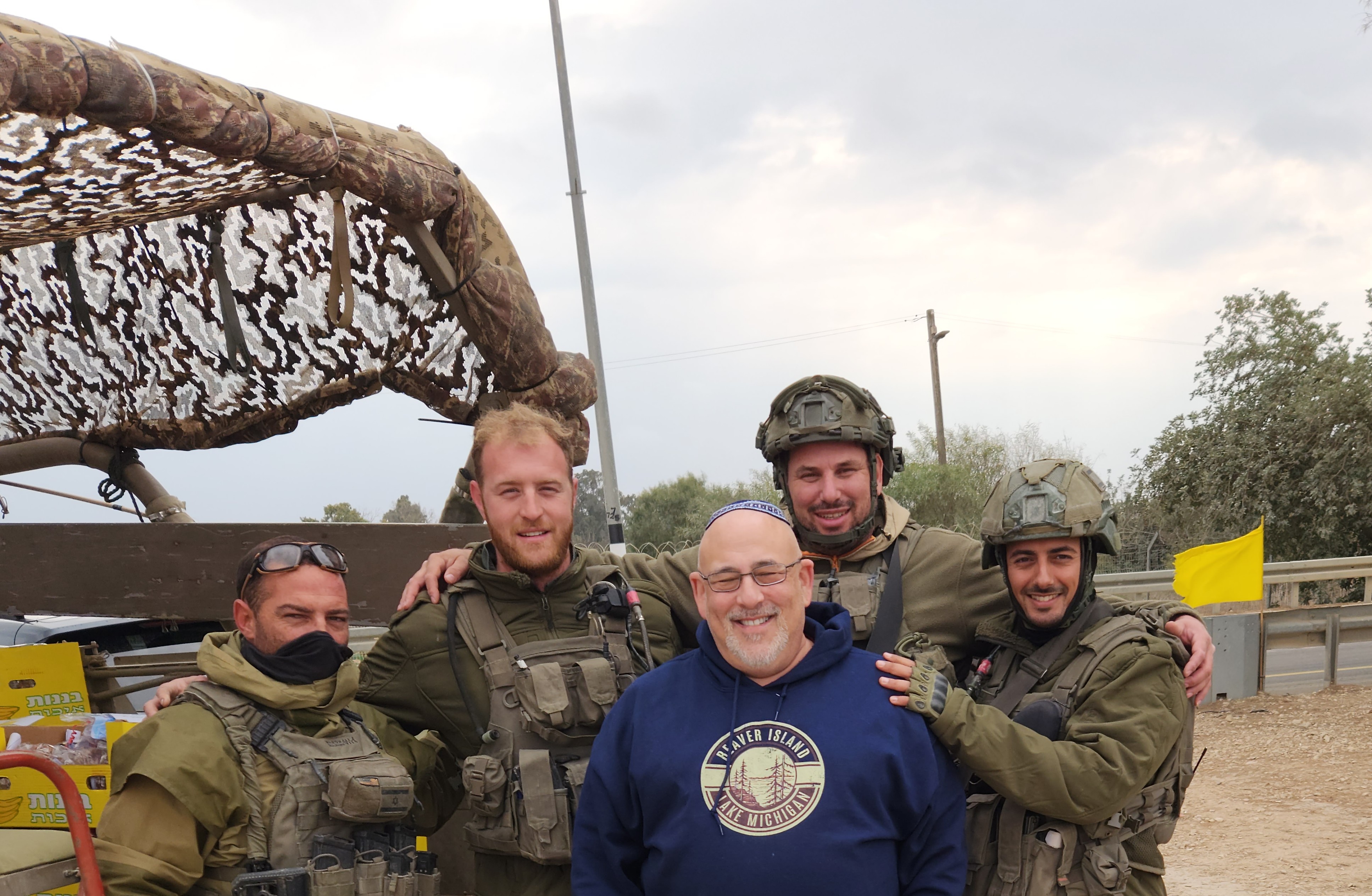
I’ll share a few of my photos from today, including one of our guide Amit, just not the heart- wrenching ones I took at the Nova site or the Tekuma vehicle graveyard of more than 1,500 burnt-out cars, trucks, vans from October 7th, each a tragic story in and of itself.

Instead, let me describe my day yesterday. It began with a trip to the Malha mall in Jerusalem, hardly different than upscale malls in the United States. My mission: to buy as many pairs of thermal pants for IDF soldiers as I could reasonably carry (since I used my discretionary fund to purchase them, you, the members of the Center, served as partners in this mitzvah). I delivered them today to the Shuvah Achim soldiers’ canteen in the Gaza envelope where they will go to good use.

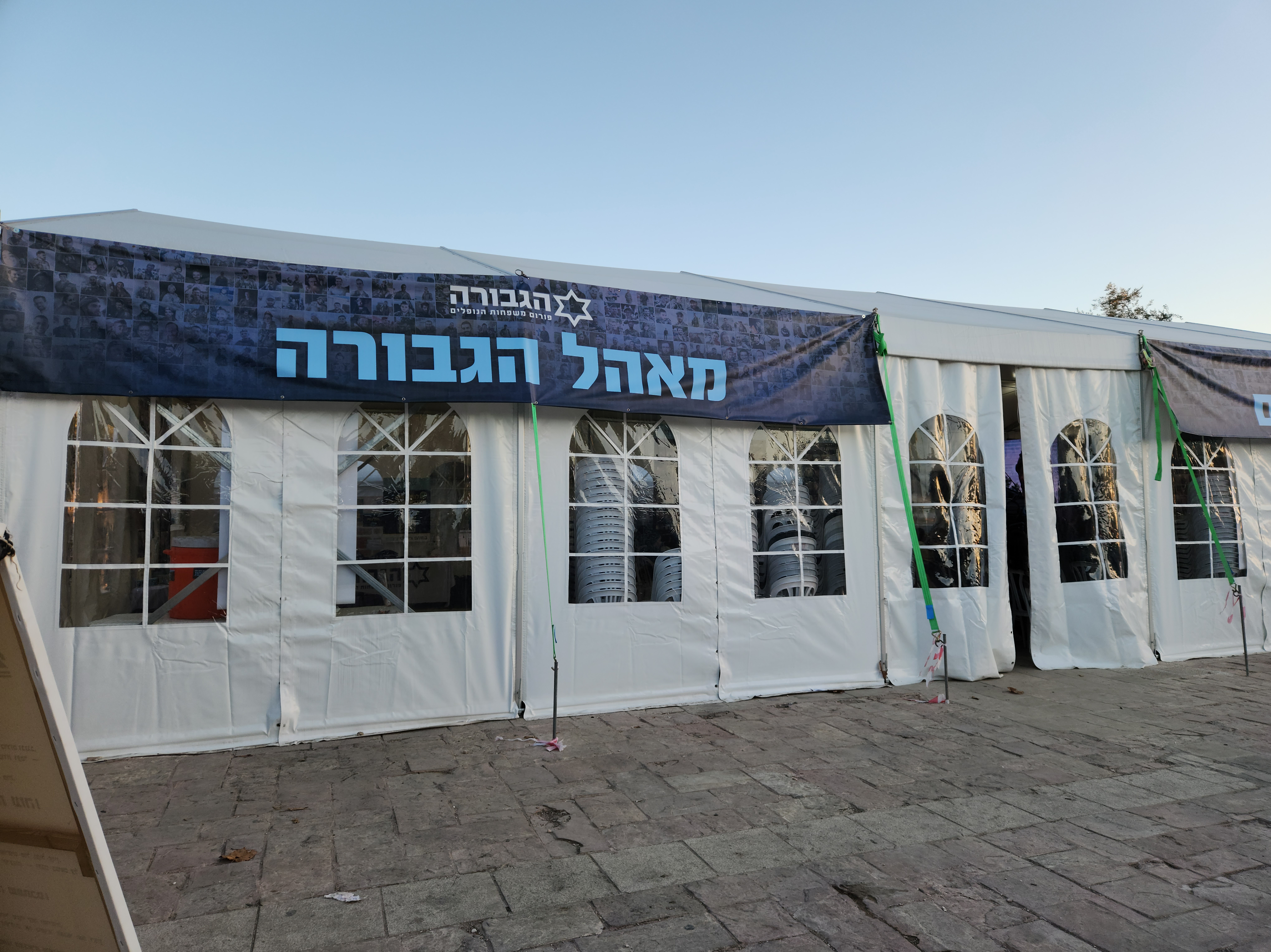
Yesterday afternoon I spent several hours at the Ohel Gevurah, an impromptu structure erected across from Cinema City and close to many of Israel’s government ministries. The tent, which opened in April, offers a place for IDF families who have lost loved ones to gather, share their stories, laugh and cry. In a society fractured in so many different ways, it is a safe haven for secular and religious Israelis — including Haredi families who have lost sons while serving — as well as Druze and Bedouin families whose children died while wearing the uniform of the IDF.  The courage of these people in the face of tragedy is humbling and inspiring.

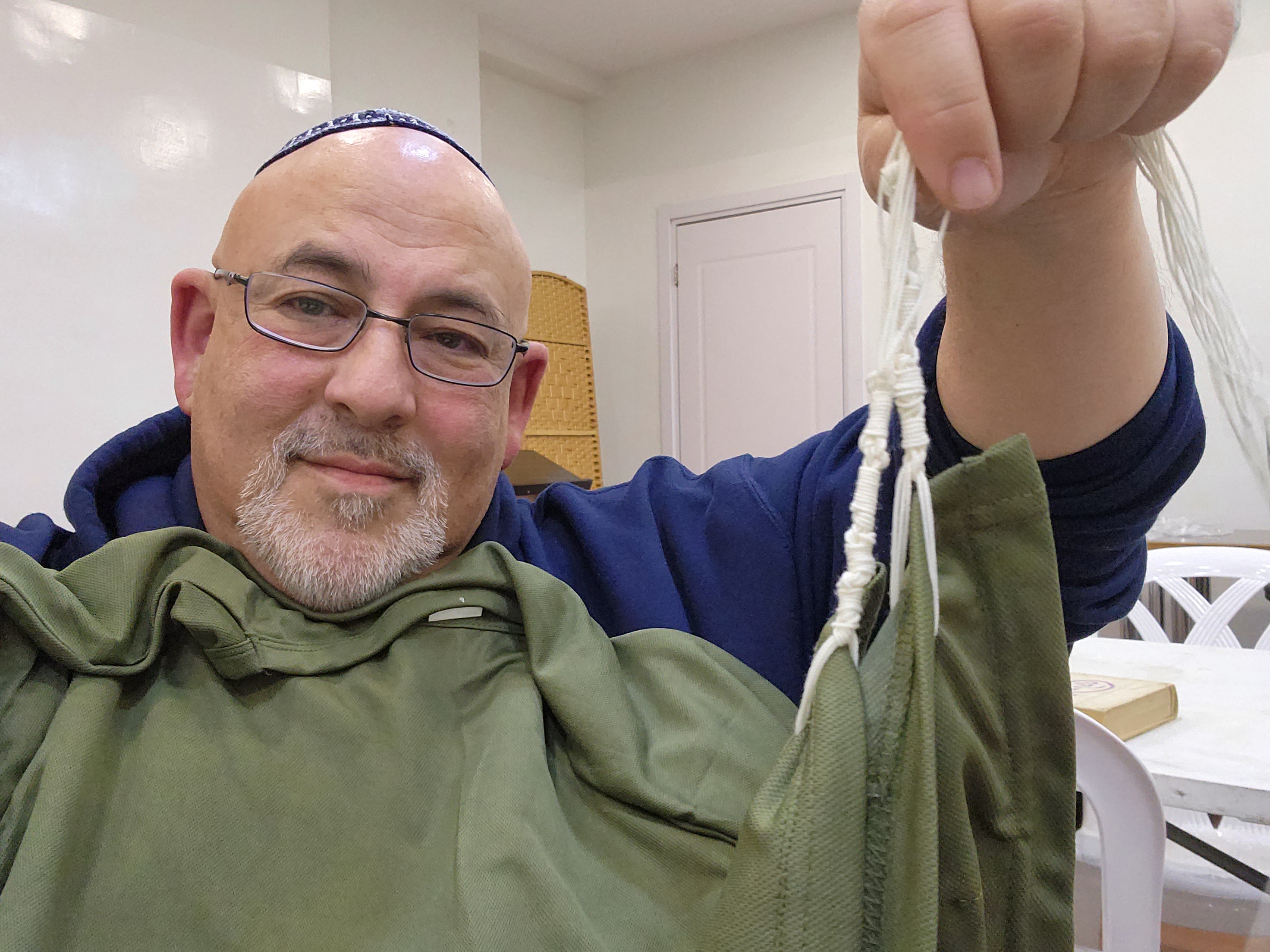
My last stop was at “Tzitzit for Tzahal”, where I joined others tying tzitzit knots on IDF-regulation olive drab undershirts. Amazingly, since November 2023, this group has completed 99,265 tallit katan garments. By Hanukkah they will pass the 100,000-mark. It was a good way to end the day.

Tomorrow is Erev Shabbat. I’m signed up to deliver hallot from Jerusalem to Zikim and Be’eri, two of the communities in the Gaza envelope struck on October 7th. I am looking forward to Shabbat in Jerusalem. Rabbi Matt Berkowitz and his wonderful wife, Nadya, have invited me for Shabbat dinner.

It has been an exhausting, yet meaningful, week. Thank God for Shabbat; I am emotionally and physically in need of a day of rest.

Laila Tov from Yerushalyim!

Jonathan Lubliner
Jack F. Shorstein Senior Rabbi
Leave a comment

Filed under RJL Biography

THOUGHTS FROM ISRAEL #5

Yesterday I drove from Jerusalem south to Kiryat Gat, a city of 62,000 about 75 minutes southwest of Israel’s capital by car. When I first volunteered in the 1980s at Neve Hanna, the home for children, it was a development town for immigrants with little to do and less to offer. Today it is home to major Intel and Hewlett-Packard plants and high rise apartment buildings dot the landscape.

At Neve Hanna I sat down with Ian – last names never seem to matter so much in Israel – the home’s staff psychologist for nearly 30 years, to discuss the impact of October 7th and its aftermath on kids who already have trust issues and emotional insecurities from troubled families.

On major holidays most of the children go home to their families for a day or two of visitation, which is to say that the majority of the kids on Simhat Torah, the morning of October 7th, were not at Neve Hanna, but with their parents in places like Ofakim and Ashkelon, the former a target of Hamas terrorists, the latter heavily pummeled by rocket fire before, during, and after the morning attack.

Thankfully, none of the current residents were injured, but absolute chaos reigned. Children, whose parents are only marginally responsible in the best of circumstances, found themselves left alone; some wandered the streets because no one was home, calling Neve Hanna on their cellphones begging to return. Meanwhile, the shutdown of roads around the Gaza envelope and the rocket attacks precluded volunteers from leaving Neve Hanna to pick up children. It took nearly two weeks and a few acts of defying government bans of vehicular travel to get all the kids back.

On top of that schools were closed for weeks after October 7th. In the interim, classes via Zoom were organized, a reminder of life during the pandemic.  The trauma of those days certainly took their toll.

Yet these children are resilient, and they know how much the incredible staff love and support them. The kids I spent time with were smiling; they even giggled at my silly jokes. I played with them and shot a few hoops (and made two baskets!).

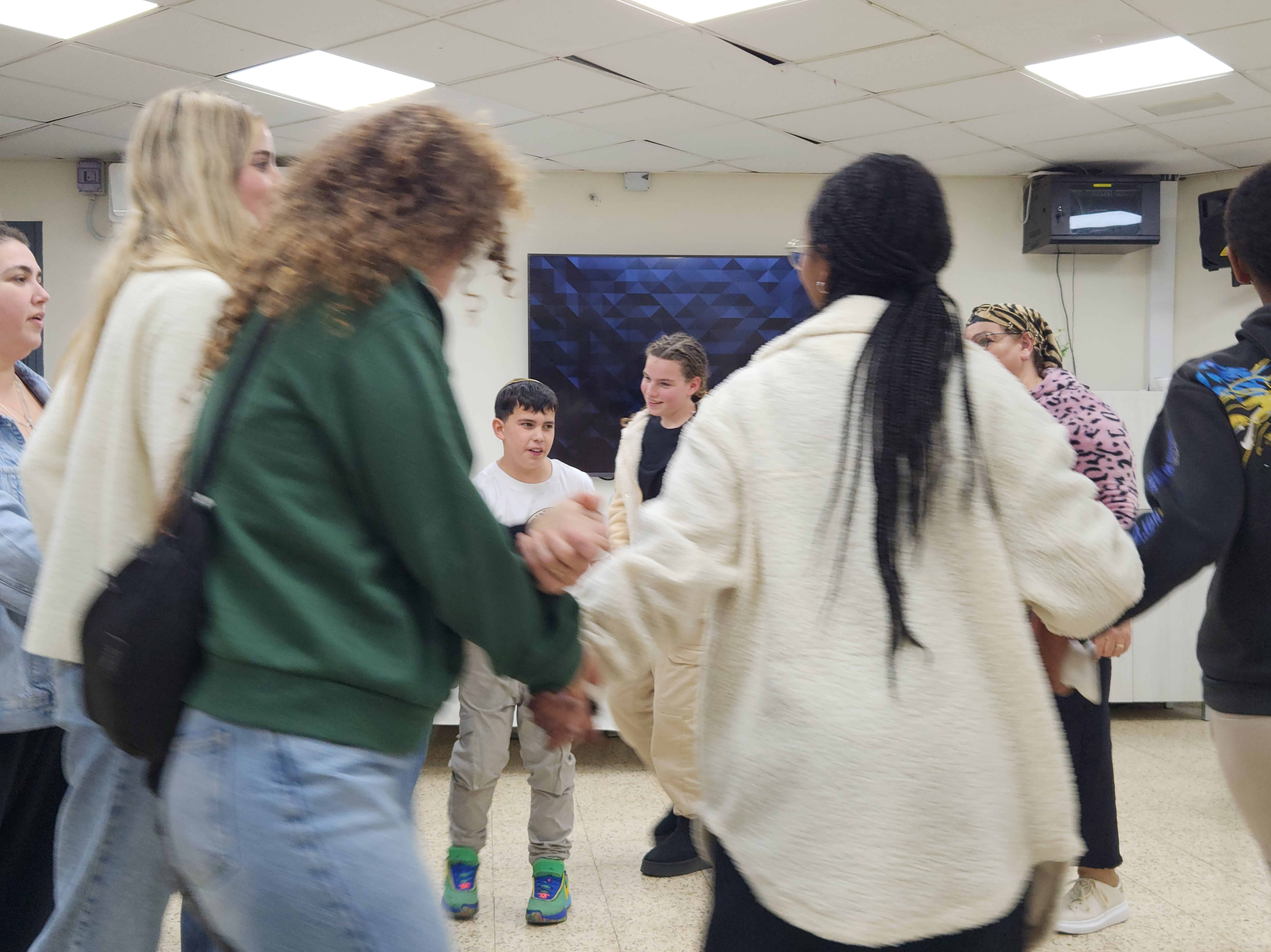
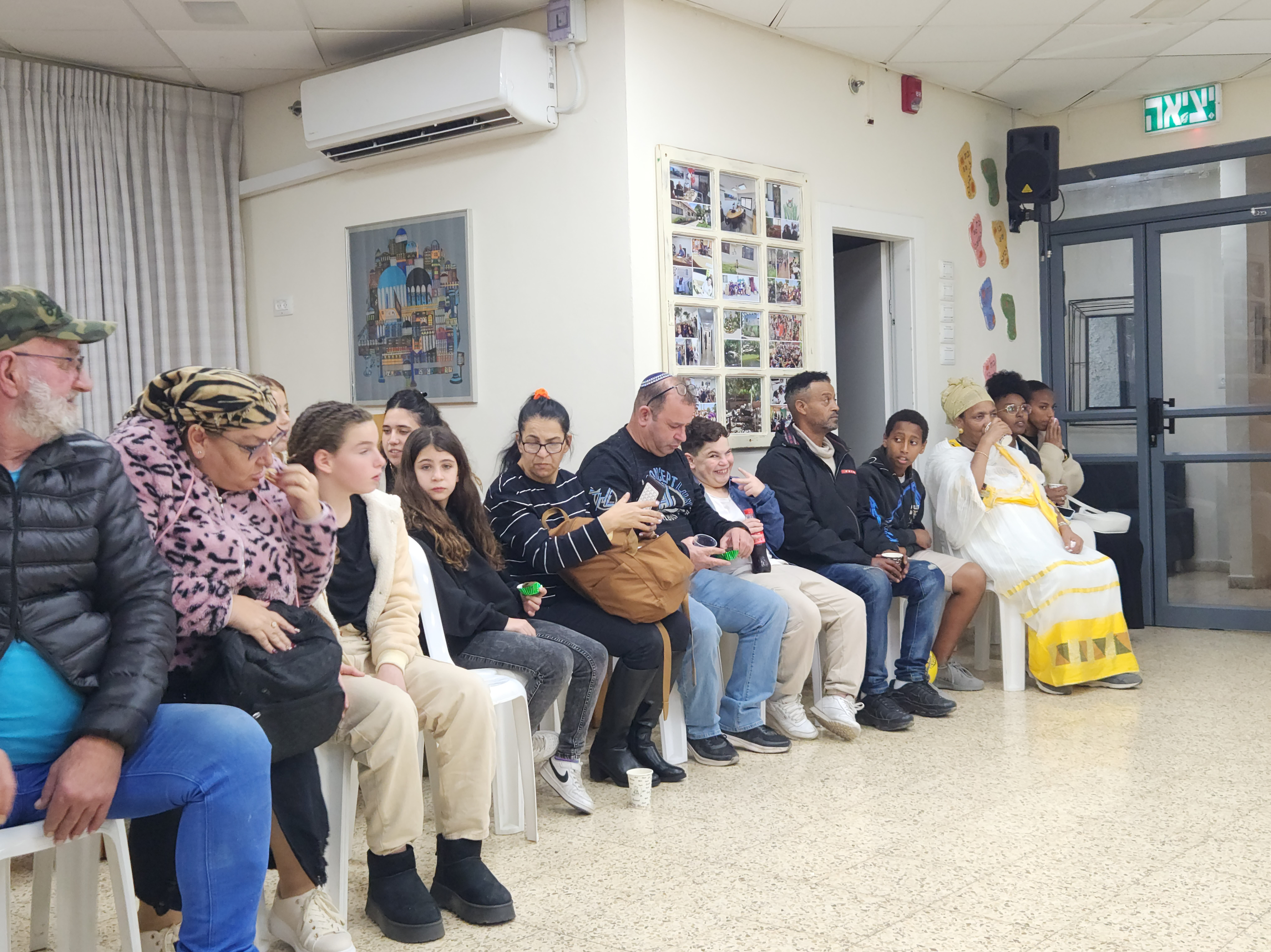
In the afternoon I attended one of the periodic celebrations Neve Hanna holds for b’nei mitzvah and their families. The yearlong program includes focused learning, trips, and projects supervised by the campus rabbi, Rabbi Liron, who is a graduate of Machon Schechter, the rabbinical school for Conservative clergy located in Jerusalem. 

Each child led a creative presentation to tell the audience of staff, visitors, and family members, something about themselves. One sculpted figures from clay to tell his story, several created videos, still another created a Kahoots game online.  Liron prefaced the afternoon with an explanation of the b’nei mitzvah program by comparing its components to a recipe for sufganiyot, the fried donuts that are ubiquitous in Israel around Hanukkah. She took things, however, one step further by actually mixing together the ingredients for the audience: flour (Torah) + yeast (ethics) + water (a thirst for learning) + oil (the projects in which the aforementioned are “cooked”, so to speak) + sugar (the celebration at year’s end, which will take place in June at Robinson’s Arch, the egalitarian Kotel in Jerusalem. It was a masterful way to keep the students and their parents attentive!

Following a celebratory dinner with the b’nei mitzvah families I returned to Jerusalem.

Because it’s getting late and I have to get up very early tomorrow, I’ll share today’s experiences with you tomorrow. I’m including a few photos from Neve Hanna.

Laila Tov!

Jonathan Lubliner
Jack F. Shorstein Senior Rabbi
Leave a comment

Filed under RJL Biography

THOUGHTS FROM ISRAEL #4

Today’s flight from Warsaw to Israel was uneventful. The majority of passengers consisted of secular Israelis or Russian emigres. I heard lots of Russian and Hebrew, but no English. Interestingly, I was the only passenger wearing a kippah, a first for me on an El Al flight.

I find the applause of passengers upon touch down at Ben-Gurion one of the most endearing of Israel travel customs. I’ve been on a few rough flights where passengers have applauded the pilot for landing safely, but the clapping that accompanies an arrival in Israel is different. For some it’s a kind of non-verbal Sh’hehiyanu, the blessing we recite at liminal moments of gratitude in our lives. For others, it’s a way to express their happiness at coming home.

As we taxied to the terminal, I noticed a dearth of planes from any other than Israeli airlines: El Al, IsraAir, and Sundor, an El Al subsidiary. That and the departure/arrivals board confirmed how much non-Israeli carriers have scaled back on flights to Tel Aviv.

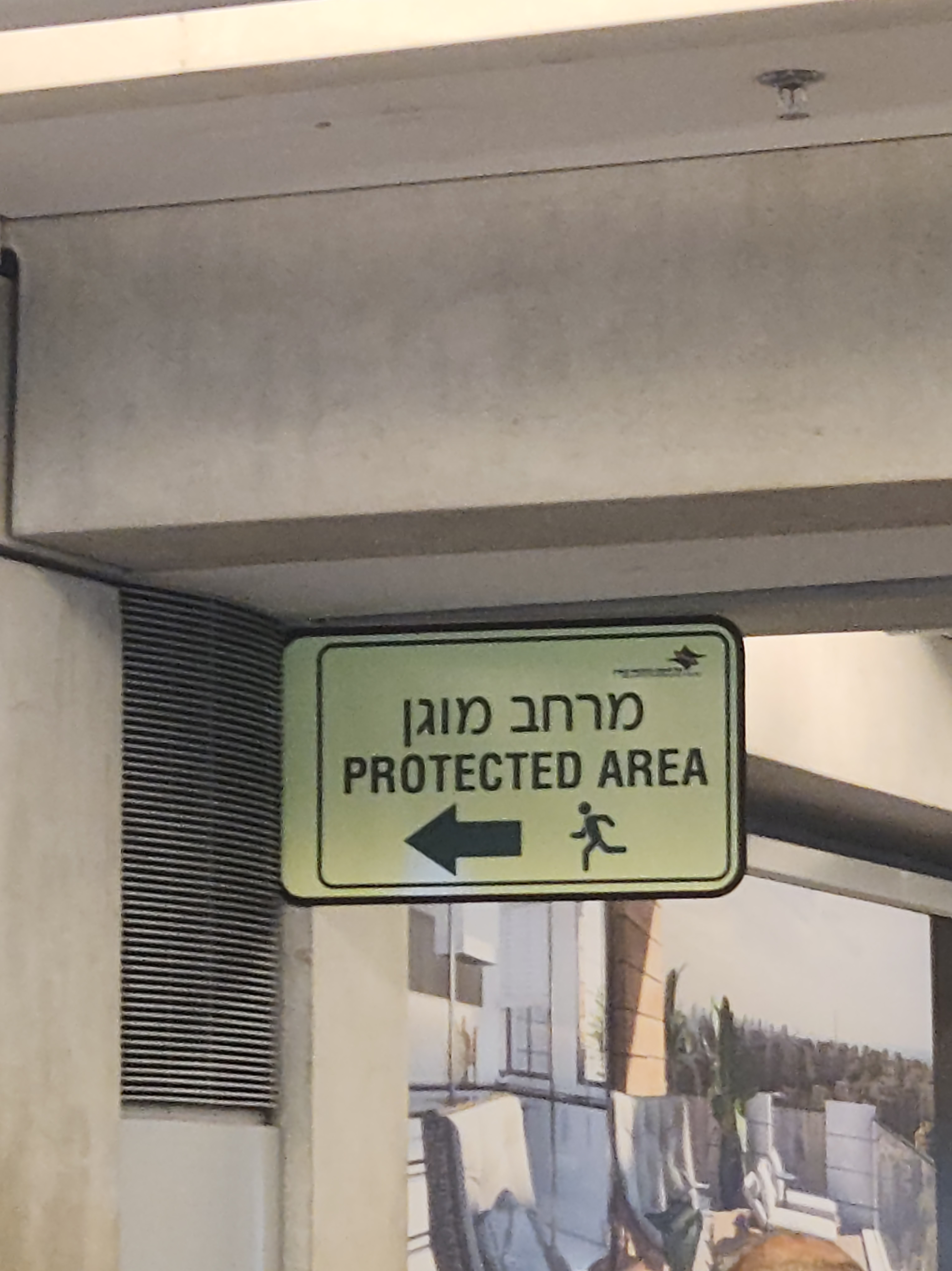
After deplaning, it didn’t take long for me to notice new signage in the terminal indicating secure areas in which to shelter during an attack. As if on cue, the air raid sirens went off. It turned out that a number of projectiles were fired from Yemen toward central Israel. All were intercepted, the sirens being a precaution for fragments of debris.

Here’s what was remarkable: while deplaning before the sirens sounded, I witnessed the kind of pushing and shoving to get off the plane I associate with Israeli crowds, but the minute the sirens sounded, everyone made their way to the shelter in an orderly fashion. We squeezed together in the most cooperative and supportive way imaginable — as tight as we were packed together, no one was left outside. Israelis come together in the most incredible way in moments of danger. Of course, given the thousands of missile attacks our brethren have lamentably faced in the last 14 months alone, they’ve had plenty of practice.

On the way to passport control, there are pictures of the hostages everywhere, a grim reminder of captivity to those who have the freedom to travel as they please.

I’m now comfortably ensconced in my hotel in Jerusalem with an incredible view of the Old City (photo below). Tomorrow morning I’ll drive down to Kiryat Gat to spend the day at Neve Hanna, a home for children from broken families. I’m sure I’ll have more to report when I return.

Until then, laila tov from Jerusalem. It feels so good to be here!

Jonathan Lubliner
Jack F. Shorstein Senior Rabbi

Leave a comment

Filed under RJL Biography

THOUGHTS IN TRANSIT TO ISRAEL #3

Life in Italy includes periodic strikes, usually of a few hours duration only and always announced in advance. We had planned to take the Vaporetto, the “water bus” which serves as the backbone of the city’s public transportation, to travel to the Ghetto in time for Shabbat services.  Alas, the transit workers were on strike for the day. 

I read with interest the long list of complaints against the government, which the union is required to publish before striking. Most of them had to do with wages and benefits, but among them was this gem: “Against Italy’s growing involvement in supporting the genocidal Israeli government” italics and emphasis added).

Setting aside the improbable linkage between the economic affairs of Italy’s transit workers and the Middle East, why do the bus drivers, train conductors and Vaporetto captains excoriate Israel alone?  The only thing more remarkable than the one-sidedness of the declaration was its complete silence regarding the many other troubled spots around the world where there is horrible suffering. The self-righteous posturing of Western Europe’s unions is maddening, but hardly surprising. This Zionist was only too happy to take a private water taxi instead . . .

Susan and I attended services at the Levantine synagogue, where the ritual follows the Sephardic nusah. The shul was sparsely attended – no more than 25 worshippers. Security was tight and required us to submit our passport photos in advance. The rabbi and the regulars weren’t particularly friendly, but I came to pray, not shmooze. Still, it would have been nice to have received more than one curt “Shabbat Shalom” (not from the rabbi). After services I would have stayed for the weekly Torah study session, until I realized it was in Italian, not Hebrew. To tell the truth, the interesting atmosphere of the sanctuary aside, I much prefer our own warmer shul, where the clergy are so much friendlier! 😉

We had prepaid Shabbat meals at BaGhetto, the kosher restaurant at which we had our cooking lesson earlier in the week. After dinner we enjoyed a leisurely walk back to our hotel. The rest of Shabbat was quiet and lovely.

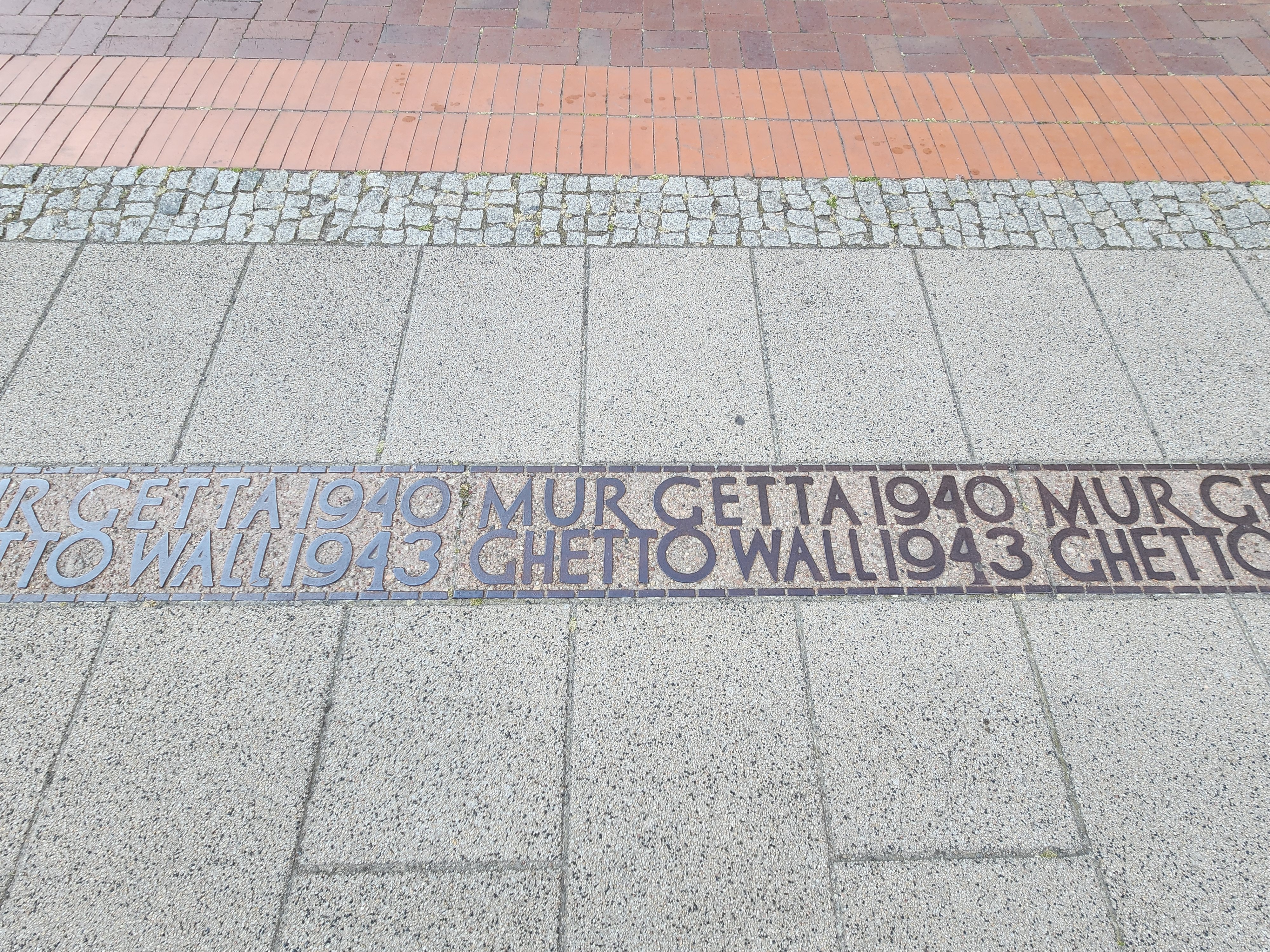
This morning I woke up at 0-dark o’clock to make a dawn flight to Warsaw, where I am now. It was difficult to find a direct flight to Israel. El Al has one daily flight from Venice, but it was booked solid for the week. Plan B was to fly LOT, the Polish Airline, and change planes in Warsaw, but the Tel Aviv leg was canceled. Tomorrow I will board El Al’s morning flight to Ben Gurion Airport. In the meantime, I’ve been wandering Warsaw’s streets, discovering how unaccustomed I’ve become to winter’s cold since moving to Jacksonville. In just a bit I will go to dinner at Bakef, a kosher restaurant in Muranow, near where the ghetto of the Nazi era once stood.

My schedule in Israel is slowly taking shape. On Tuesday I will travel to Neve Hanna, the children’s home in Kiryat Gat with which I’ve had a relationship for many years. On Wednesday morning, I’ve signed up to tie tzitzit on IDF combat approved garments and then will visit the Gevurah tent near Cinema City in Jerusalem to show solidarity with bereaved families whose children have died in combat in the North and Gaza. On Thursday I will travel with a survivor of the Nova festival to bear witness to the brutality of October 7th. My next post, God willing, will be from Israel.

Życzę dobrej nocy z Warszawy (“Wishing you a good night from Warsaw” – so says Google Translate!)

Jonathan Lubliner
Jack F. Shorstein Senior Rabbi

Leave a comment

Filed under RJL Biography

THOUGHTS FROM VENICE #2

It has been an eventful week, one tinged by sadness at learning of Inge  Gaffney’s passing, may her memory be for a blessing. She and Rabbi Gaffney touched countless lives during and after their time in Jacksonville. May the Holy One comfort the Gaffneys and the many who grieve Inge’s loss among the other mourners of Zion and Jerusalem.

*****

Earlier this week, Susan and I spent a day in Padua, where we saw Giotto’s stunning 14th-century frescoes in the Scrovegni Chapel and toured Italy’s second oldest university. In Padua Galileo and others fought for scientific truth and academic freedom from the heavy-handed domination of the Church. And while Jews were generally prohibited from most disciplines, they were permitted to study with the faculty of medicine and become physicians. 

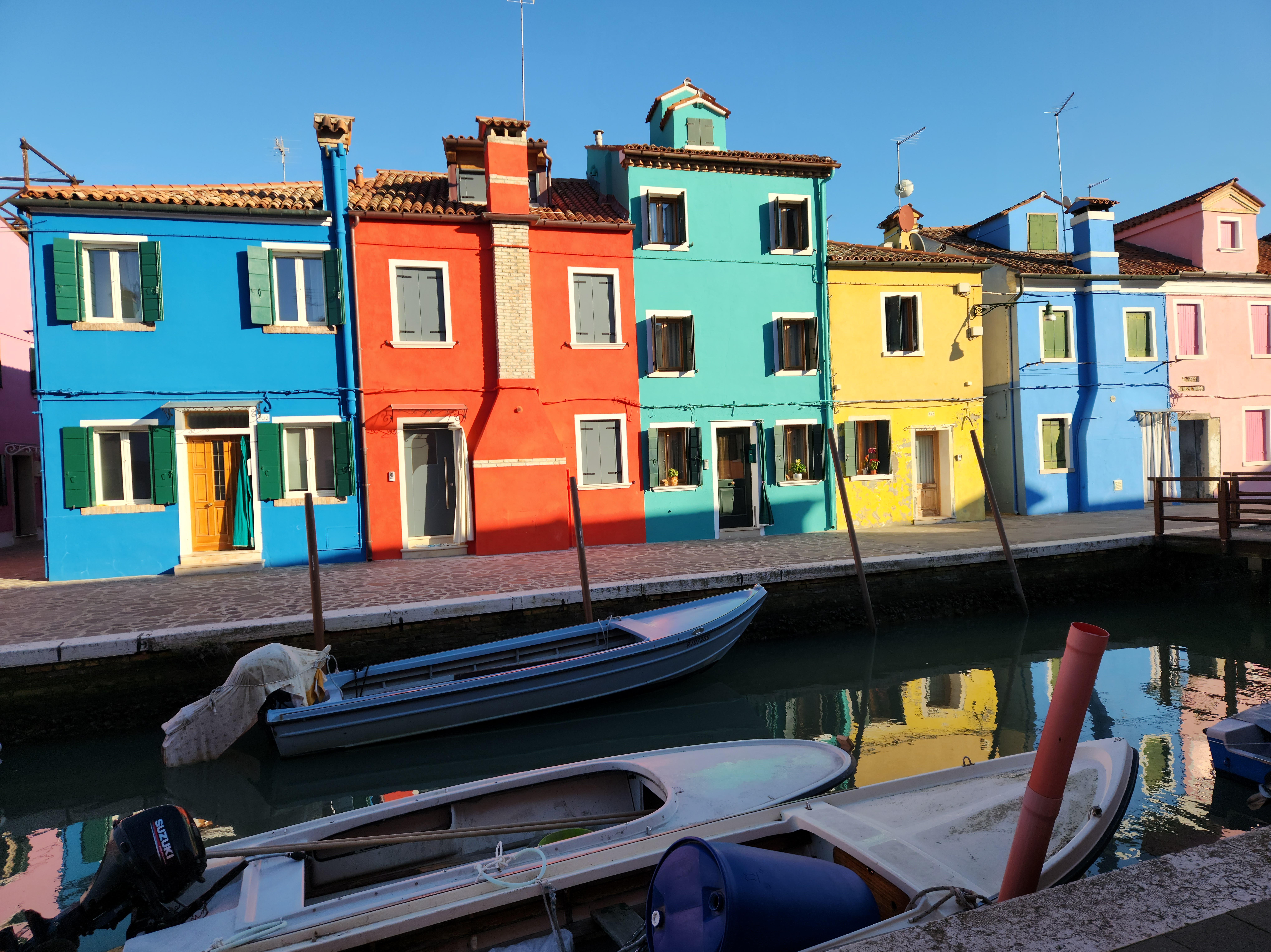
Returning to Venice, we visited the glassmakers of Murano, and spent an enchanting afternoon on Burano island, known for its brightly colored houses and home to the nearly lost art of medieval lacemaking.  We will visit the Doges Palace and San Marco Basilica this morning before getting ready for Shabbat.

One of the highlights of the week was the Italian cooking class Susan and I signed up for at BaGhetto, one of two kosher restaurants in Venice. What made it so memorable was our teachers: Ronnie, the Italian-trained chef from Bangladesh, who speaks no more than a few words of English; and Thatch, the multi-lingual maitre’d from Cameroon, who assisted and translated for Ronnie. That a Muslim from Bangladesh and a Christian from West Africa were working in a kosher restaurant, teaching two American Jews how to make authentic Italian dishes was a delicious irony. Literally.

We are looking forward to a quiet Shabbat. Because Venice has an eruv I’ll be able to carry my own tallit to shul, and thankfully, a carefully annotated map showing how to navigate from the hotel to the Ghetto and back. It would be all too easy to get utterly lost in the labyrinth of alleys that are this city’s streets.

After Shabbat, I will pack up and prepare for a pre-dawn departure to Warsaw, where I’ll connect to my flight to Israel. In just a few days both my heart and my body will be in the East! I look forward to sharing the next leg of this trip with you.

From the City of Water to the River City, wishing all of you a Shabbat Shalom,

Jonathan Lubliner
Jack F. Shorstein Senior Rabbi

Leave a comment

Filed under RJL Biography

THOUGHTS FROM VENICE #1

Today was our first day in Venice. A two-kilometer walk through the winding alleys and over the side canals brought us to the Jewish ghetto.

Until Napoleon opened its gates in 1797, the ghetto was certainly no tourist attraction for the nearly three centuries Venetian Jewry was compelld to live there. Crowded into a tiny area, builders added floors to accommodate residents because they could not expand beyond the ghetto’s confines. To this day, Venice’s tallest building is in the ghetto: a veritable “skyscraper” at seven stories!

Although the majority of Venice’s Jews, who number about 450, live all over the city, the ghetto remains the institional heart of the Jewish community and home to five synagogues. Today only two are used: the Spanish synagogue in the summer, the Levantine in the winter (because the latter has heating). That once upon a time five synagogues thrived here not only attests to the size of the Jewish  population — 5,000 at its height — but the diversity of its origins. Jews from other parts of Italy mingled with those from Germany, France, Turkey, and Greece.

On the front of the Italian synagogue, built in 1575, there is a small unplastered square with Hebrew lettering that reads, “zekher la-hurban”, meaning “in memory of the [Temple’s] destruction.” Since Talmudic times it has been customary to leave a small unfinished patch in a Jewish home or a synagogue as a reminder of Jerusalem’s destruction, a statement that we are less than complete in her absence. Gazing upon this facade, I felt a deep connection to those who placed this simple, yet powerful message on the front of their synagogue 450 years ago. I found myself wishing that those who deny in the name of ignorance the link between Jews, Judaism, and the land of Israel could be transported to the spot where I stood and see those words. No matter where our people wandered — whether in Spain, Italy, or Jacksonville — our hearts are in the East though our bodies are in the West. A week from now I’ll be in Israel!

Ciao,

Jonathan Lubliner
Jack  F. Shorstein Senior Rabbi
Leave a comment

Filed under RJL Biography

CHECKED BAGGAGE: ROSH HASHANAH 5784

Gorilla vs. American Tourister, 1971 commercial

“This day I must confess: For the sin I have committed by packing too much; and for the sin I have committed by paying the baggage fee for a second suitcase . . . “

Well, these aren’t sins, exactly, but while traveling through Europe and Israel this summer I was guilty of excessive shlepping. The great travel sage, Rick Steve, once said, “On your journeys you will meet two kinds of people: those who pack light and those who wish they had.” My wife, Susan, belongs to the first category, but I’m definitely in the second. I watched packing videos and bought compression cubes, vowing to fit everything I needed for a seven-week trip into a single backpack or suitcase. Instead, I ended up with 50 pounds of backpack, and a daypack, and a suitcase. I shvitzed my way through seven countries — most embarrassing of all, I clocked more than a few people with my backpack when turning around. I am now fluent in saying “I’m sorry” in five languages. Still, there were many items I chose to leave behind. The pile of things that didn’t make the final cut was far larger than those that did.

Of course, my packing dilemma was but annoyance when compared to the life-and-death situation faced by Jews during the Shoah. I went to Auschwitz/Birkenau and Majdanek in Poland, and to Terezin in the Czech Republic. I soberly contemplated mountains of old suitcases, each chalked with the name and address of its one-time owner. I saw mountains of eyeglasses, shoes, bowls, cups, tallesim and other items that once were carried in those suitcases. Imagine being given a few hours, a day at most, to pack your belongings, told that you would be “resettled” permanently in the East. Imagine you were limited to a single suitcase. What would you have taken? Practical items only? Reminders of home? Money or jewelry to bribe those who held your fate in their hands? Each decision to pack something diminished the room available to bring something else. Yet for observant Jewish men, there was no question about leaving their tallit and tefillin behind, — a fact brought home by the piles of such items I saw on display at Camp I of Auschwitz.

All of the talk about luggage was itself nothing more than an elaborate plot of deception. In some places, the German authorities would even helpfully suggest what items to bring. As suitcases were gathered officials often distributed claim checks. The truth was the victims never saw their belongings again. Instead the Nazis set up an entire industry for collecting and sorting the stolen property of those sent to the gas chamber or the labor camp. The Shoah was hardly the first time in Jewish history that our ancestors had to make decisions about what to pack as they fled persecution and wandered from pillar to post, from one place to another.

Those who’ve seen Fiddler on the Roof, will recall the townspeople of Anatevka contemplating their meager belongings as they prepare to leave: “A little bit of this, a little bit of that / A pot, a pan, a broom, a hat.” Immigrants to Ellis Island had to condense their entire lives to the contents of a single trunk. Some who came from Eastern Europe freed themselves from the religious practices they considered impediments to life in the New World. Stories are told of Jewish immigrants who threw their tefillin into the New York harbor before disembarking at Ellis Island. They had yet to arrive in their new home, but were already unpacking . . .

Preparing for travel is as old as the Jewish People itself. It has its origin in the Exodus story. The Torah tells us the Israelites left Egypt in a hurry: “מָתְנֵיכֶ֣ם חֲגֻרִ֔ים נַֽעֲלֵיכֶם֙ בְּרַגְלֵיכֶ֔ם וּמַקֶּלְכֶ֖ם בְּיֶדְכֶ֑ם — Their loins girded, sandals on their feet, and staff in hand . . . their kneading bowls wrapped in their cloaks upon their shoulders” (Exodus 12:11, 34). The Torah also mentions that the Egyptians gave our ancestors objects of silver, gold, and additional clothing. What an odd assortment to carry into the desert: bakeware and cloaks, gold pieces and walking sticks! Several chapters later we discover that the women of Israel brought something else with them: timbrels to play as they joyfully sang to God after their escape on the shore of the sea. Despite their hurried departure from slavery, the women of Israel had faith enough in God’s redemption to bring tambourines with which to rejoice! Consider a person’s luggage and you will learn much, not only about her destination but the manner in which she travels, her needs and wants, even her fears and hopes. But there are times when our baggage can enslave us, our belongings can become stern masters, and we its helpless servants with no choice but to obey its commandments.

As I settled into my seat on a Dublin-bound plane this summer, I suddenly realized I had left my CPAP machine at the newsstand near the departure gate. I bolted my seat in panic, and apologetically elbowed my way to the exit through the oncoming waves of boarding passengers. At the jetway I pleaded for permission from security to leave the plane and return to the terminal. Thankfully, my CPAP was where I left it. As I returned to my seat, I was relieved, but also rattled, and annoyed — both by my forgetfulness as well as the burden of having to carry a CPAP around in the first place. There are things we have no choice but to carry, yet we long to be free of their burdens. This is why the prohibition of carrying on Shabbat in public spaces can be so meaningful. There is real freedom in knowing you’ve forgotten nothing, because you carry nothing. It is inconvenient as hell, but that’s exactly the point: The one day I don’t carry reminds me of how enslaved I am to my belongings the other days of the week. How many times have you left the house, only to realize you’ve forgotten something? Panicked, you turn back to retrieve your (fill in the blank) . . . phone, wallet, passport, pills, umbrella, briefcase, purse . . . Unless you’re already too far away to return, at which point the only recourse you have is to course your forgetfulness.

The Talmud teaches that Shabbat is a foretaste of the world-to-come (B. Talmud, Shabbat 57b). To refrain from carrying on the Sabbath is a rehearsal in miniature of the final journey we all take. The last flight we board, metaphorically speaking prohibits all luggage except for our very selves. Jewish law forbids the burial of objects with the deceased because doing so diminishes the true nature of a journey beyond the world of things. Eternity ultimately liberates our souls from property. We may “need” our favorite Gators hat when we travel to Gainesville for a game, but not when our souls come before God.

At admission interviews to the Jewish Theological Seminary, Professor Abraham Joshua Heschel used to ask prospective rabbinical student the following: “If you were traveling to the Alaskan wilderness and were allowed to bring only one item with you, what would it be?” Eager to impress the scholar with their piety, the students would offer answers such as a tallis, a pair of tefillin, a TaNaKh – the Hebrew Bible, or even one of Dr. Heschel’s own books! He would then shake his head, and with a smile respond, “You wouldn’t bring a coat?”

We aren’t always good at packing for life. We forget our coats, so to speak, relying on an erroneous weather report or forgetting to check the weather all together. Each day we travel through life, we bring our baggage with us. Beyond the items in our purses or suitcase, we carry attitudes and preconceptions, hopes and disappointments, values, emotions. Without even being aware of it, we may be toting way too much personal baggage; it’s also possible that we may have packed insufficiently, or are shlepping around the wrong kind of luggage with which to deal with life’s exigencies. Rosh Hashanah is a day of unpacking. We have completed a journey since embarkation a year ago today. What souvenirs did we obtain along the way? Were they worth the extra weight in baggage? What attitudes did you carry around that turned out to be useful? Which ones just weighed you down and made it harder to move?

Rosh Hashanah is also a day of packing — for once we’ve emptied our suitcases and taken inventory, we have a chance to reevaluate what to bring with us as travel into the New Year. But despite the warning notes of the shofar some of us will continue to pack haphazardly, we won’t even bother with a list; instead we’ll just throw a bunch of emotions and values into our spiritual suitcases, or mindlessly stuff things into our bags, hoping we’ll be able to still zip them closed. Others won’t even get that far, but instead allow others to pack for them because they are afraid to think for themselves, But in NOT packing wisely for the journey, we are all but guaranteeing that somewhere along the way we’ll make the unpleasant discovery that life has filled our baggage with grudges, stale attitudes, pettiness, complacency, self-righteousness, and arrogance.

As a rabbi I often stand in the international terminal of life’s arrivals and departures. As some depart to the next world they leave behind on life’s carousel a treasure trove of wisdom, a suitcase filled with the love of Jewish believing, behaving, and belonging. We watch these items go by without making a move to claim these bags, even though the past generation has put our names on the luggage tags. And so unfolds one of life’s tragedies. For all of us have left unclaimed bags on life’s carousel, some even unaware of the unclaimed property that awaits them. There are the family stories we don’t know, the aspects of our heritage unfamiliar to us, even rituals and ritual objects that we have deemed dispensable. But at this season of reflection we are urged to look more closely. It is entirely possible that the suitcase we’ve left behind may be the one we most need to take with us.

On Rosh Hashanah it is written and on Yom Kippur it is decided: Whose luggage will be lost and whose will be found? Who will pack wisely and who foolishly? Whose excessive baggage will cost them dearly and whose will remain unclaimed? Have you created a thoughtful checklist of what to bring on your journey through life? Have you included in your luggage patience, humility resilience, kindness and compassion? On life’s travels wherever you go there you will be. But your luggage, well, that is another story.

Leave a comment

Filed under RJL Biography

Descending to Ascend: Spiritual Mountaineering


Over the last year-and-a-half I’ve cultivated a new hobby: mountaineering.  Let me be a little more specific: reading about mountain climbing, especially those who’ve summited the fourteen tallest mountains in the world, all of them 8,000+ meters, that is, at least 26,000 feet high.  Everest is on that short list, but so are mountains with names like K-2, Anapurna and Nanga Parbat.

The greatest climber of our time? Reinhold Messner hands down.  If you aren’t familiar with his name, you should be.  He was the first to conquer all 14 peaks over 8,000 meters; he was also the first to reach the top of Mount Everest without supplemental oxygen. His other adventures include a solo crossing of the Gobi desert on foot and Antarctica on skies.  What is most impressive about Reinhold Messner, however, is his candor in admitting acknowledging his many defeats "At least one-third of my plans have failed,” Messner reflected in an interview.  “I failed a total of 13 times on the 8000 meter peaks. I have [not only]  failed many times, but I am the mountaineer with the most failures.”

My new found fascination with mountaineering and the advent of COVID-19 are not coincidental.  Living in a more restrictive circle has occasioned in me a hunger to embrace a larger world.  And if I can’t get to places that are usually accessible to me, then I can at least mentally travel to places that are completely inaccessible to me -- even in more normal times. There’s an odd comfort in knowing I am really no farther away from summitting K-2 or the Matterhorn than I was before COVID.  Through photography, documentaries, and my own imagination I may accompany the great mountaineers of our time as well as those of earlier ages.

There are two very different approaches to mountain climbing.  In Alpine style, the climber carries all of her food, shelter, and equipment as she climbs.  Alpinists start up a mountain with the goal of not returning until they have achieved their objective.  Expedition style mountaineering, on the other hand, is totally different.  It requires setting up a fixed line of camps on a mountain in advance. Expeditionary climbers will carry equipment upward, establish a camp and then descend.  They will do so again and again, establishing subsequent camps higher up the slope, only to return to base camp after each trip.  Finally, they will set out to achieve the summit, stopping at the various camps they’ve set up along the way.  It is far more taxing and time consuming, but it’s by far the safest way to conquer the tallest mountains.

When we first encountered Mount COVID, we approached it as Alpinists.  It appeared as a single challenge to face, overcome, and put  behind us.  In the first few months of the pandemic, people were patient, philosophical even.  Couples postponed weddings or scaled back their festivities without complaint; b’nai mitzvah celebrations were held in empty sanctuaries as friends and family joined online. For several months we didn’t hold a single service in person, but instead moved Shabbat and weekday services to Zoom without a minyan.  School met largely online.  We knew a vaccine would come and we just had to sit tight.  And, indeed, for awhile it appeared that COVID was on the wane.

Yet what we thought was a straightforward Alpine-style climb has turned out to be a Himalayan expedition.  We suffer from pandemic fatigue.  Supermarkets no longer bother updating their signs with the latest CDC guidelines.  Although this surge has been worse in Florida than anything we encountered last year, more people shrug their shoulders.  Institutions striving to protect people and follow the guidance of medical professionals within the community are verbally attacked for being dictatorial, exclusionary, and paranoid. We are done with COVID, even if it clearly isn’t done with us.  

Yet if we’re prepared to learn, the pandemic has valuable life lessons to impart. In our impatient society, “If the Lord is my shepherd, I shall get what I want, He maketh my life linear, and leadeth me by the short cut. He restoreth my impatient soul, and guideth me by the black-and-white road for my own sake.”  

 Still, “Life is what happens when you’re busy making other plans,“ as John Lennon once observed.  We are on a mountain in the Himalayas, a windswept ledge, one in which the way forward is marked by jagged shoulders of rock and outcropings that need to be neogiated.  To reach the summit we will need to climb strategically and patiently, for responsible climbing necessitates moving downward to avoid certain obstacles before resuming the trek upward.

Of course, this is ultimately true of life in general.  Time and again we disappoint ourselves by expecting life to be linear.  We know problems arise, but then we solve them and life goes on, one and done. Except when it doesn’t. Life’s topography isn’t flat or smooth.  Alcoholics fall off the wagon, get back on, fall off and get back on again; they may need to fall many times before finally achieving long-term sobriety.  A person marries with the hope of living happily ever after, but then goes through a divorce, sometimes multiple times. A cancer in remission recurs, a friendship once mended can fracture yet again.  A city hit with a devastating hurricane may be hit by another monster storm on the same date 16 years later.  

Rabbi Elimelekh of Lizhensk, an early master of Hasidism wrote of the spiritual journey of the tzadik, the truly righteous leader, as one of yeridah l’tzorekh aliyah, descent for the sake of ascent.  For the Lizhensker, a rebbe travels between the realm of the supernal and the material -- in caring for his followers he brings God’s transcendent power down to earth in the form of blessings even as he seeks to elevate his Hasidim to higher spiritual levels.  Each time he descends from the spiritual heights to attend to the needs of others, he gathers strength to climb even higher.

We are not tzadikim, but on life’s mountain survival requires we embrace yeridah l’tzorekh aliyah.  Like trekkers to the great peaks of the Himalayas, the thinness of the atmosphere necessitates that we descend to climb higher.  Our faith in God teaches us to accept the labyrinthe in which we find ourselves as integral to the journey.  Our setbacks are detours, not failures.  We descend only to push higher and upward.  At this time of year, if we are truly honest with ourselves, we are more aware of our faults and blemishes, our disappointments and failures.  It is also taught that at no other time of year is God closer to us than at the season of the Yamim Noraim.  These are not coincidences, but are closely linked.  Near the peak of the greatest mountains, the air is at its thinnest, the going at its hardest.  To be truly worthy of a summit, one must have travelled up and down the lower slopes many times.

There’s a story of a man lost in a forest.  He comes upon another man, who is just as lost as he is.  Still, they walk on together -- not only because there is comfort in sharing a burden with another person, but also because they can guide one another away from the paths that each previously tried, yet led to nowhere. Reinhold Messner makes this point even more forcefully.  In his book, My Life at the Limit, he writes, “If I lose my climbing partner, I’ve lost everything. He’s the only one who can belay me on the next pitch, or help me survive another night.  We need our partners, even if it’s just to share the fear.  It’s not just one guy and another guy; it’s a unit, a fellowhip of the rope.  The team is the sum of its parts, and it’s not divisible.  This feeling of solidarity, of shared identity, is unconditional.”

The greatest challenge we face now more than ever is to realize there are no single climbers.  In truth there never are any single climbers --  to live in society is to impact others and be impacted by them.  The decision to wear masks in public or not affects others; the decision not to get vaccinated affects others -- more dramatically, but no less than myriad other decisions we make: to volunteer, to give tzedakah, to pay synagogue dues, to drive defensively, to quit smoking or to find a designated driver when attending a part.  In asserting our complete autonomy we slice through the rope that ties us to our fellow climbers.  The irony is that in cutting the rope we may think we are freeing ourselves of the burden of those below us, when in fact we may actually be cutting the very link that keeps us secured to the climber above us. We do this at great peril to ourselves and others.

In the village of Zermatt, Switzerland, in the shadow of the Matterhorn, there is a museum dedicated to climbing.  There you will learn the fascinating story of Edward Whymper whose party of seven were the first to conquer the Matterhorn in 1865.  Tragically, their great triumph was marred by tragedy during the descent: one of their ropes wore out and split apart; four of the seven fell to their deaths.  The broken end of that rope is still on display in Zermatt, 160 years later.

On this Rosh Hashanah let us check the ropes that tie us as climbers together on life’s slopes so that we may ascend together, because those ties that bind us are the best guarantee  we have of reaching the summit and back.  We've got some difficult days ahead, some downward stages on our upward journey, but we can reach the mountaintop and from it’s pinnacles see a land of promise.  “As “ שִׁ֗יר לַֽמַּֽ֫עֲל֥וֹת אֶשָּׂ֣א עֵ֭ינַי אֶל־הֶהָרִ֑ים מֵ֝אַ֗יִן יָ֘בֹ֥א עֶזְרִֽי -- A song for going upward: I lift my eyes to the mountains, from where will my help come?”  From the maker of mountains and the mover of hearts, together we will climb higher and lower, and ever higher, above and beyond.  

Leave a comment

Filed under RJL Biography